
Clinton Neighbors: Block Sources
Every source answers a different question, so sort them out before you start. A map places one Clinton parcel beside another. An assessment card lists the assessed owner and the situs address. It also carries a mailing field and account data. A recorded deed names the parties and gives a legal description. Together they form a solid property trail. What none of them offers is a current roster of everyone living on the Clinton block. So treat each result as one clue rather than a household list. Note the source, the date, and any access limit as you go.
| Source | What it shows about a block | Access and privacy boundary |
|---|---|---|
| PGAtlas parcel map | Adjacent Clinton parcel shapes, addresses, property links, and map layers | Free graphical map, not a survey or title record |
| SDAT assessment card | Assessed owner, mailing and situs fields, value, and account details | Repeat address searches; no public owner-name or occupant list |
| Maryland Land Records and Plats | Recorded transfers, parties, lot or block data, easements, and legal descriptions | Index, account, image, and copy rules apply |
| DPIE permit history | Clinton address cases, applications, inspections, and status history | CAPTCHA; online history is stated as July 2013 to present |
| Voter routes | A Clinton voter’s own registration or lawfully supplied address and precinct fields | No public Clinton street browse; protected-address and oath rules apply |
| Reverse directories and census | Dated Clinton street entries and household snapshots | Library or archive request; neither is a current parcel list |
| Association register | Clinton-area organizations receiving development-application notices | Annual registration, not a member or occupant directory |
Note: A Clinton mailing field, map popup, or recorded party reflects its source record only, and none of them should be read as proof of current occupancy.
Clinton Neighbors in PGAtlas
Start a block view in PGAtlas. Enter the Clinton premise you care about. Turn on the parcel and address-label layers. Then click the target property. Jot down the displayed layer, the address, the property identifier, any account link, and the map date. Then pan along the Clinton street in both directions. Pick out the parcels on either side. The viewer includes measure, select, share, and login tools. Keep personal notes out of any shared map link.
The map is only an organizer for the official search ahead. It points to which Clinton parcels touch yours. SDAT and recorded documents carry the actual property evidence. For a full address chain down a named street, the Clinton street directory is the right tool. A small map view is never a complete street search.
Clinton Neighbors: Adjacent Parcel Flow
Work outward from one verified Clinton address instead of guessing at a radius. That keeps three things separate: parcel adjacency, ownership, and any claim about who lives where. A shared parcel edge is just a map relationship. It says nothing about whether two households know each other, or whether everyone tied to either Clinton parcel actually resides there.
- Locate the Clinton premise in PGAtlas with parcel and address layers on, then click the target feature and save its displayed
PROP_ID, Clinton address, account link, layer, and date. - Pan and click each Clinton parcel that shares a boundary or sits immediately across the road. Build a working table with the map identifier and Clinton situs address for each one.
- Run each Clinton situs address separately in Maryland SDAT Real Property Search. Keep Clinton mailing and situs fields as separate columns.
- Use Maryland Land Records and a recorded plat to check the Clinton deed reference, lot lines, road rights-of-way, easements, and title sequence.
- For a dated Clinton block view, request a reverse-directory street section and compare it with the relevant census or newspaper period.
PGAtlas labels its Clinton parcel shapes graphical data, assembled from deeds, plats, tax maps, and rights-of-way. The map is a fine discovery tool. When a boundary actually matters, though, only a recorded plat or deed will do.
Clinton Parcel Records and Occupancy
The classic misstep is treating an owner name, tax mailing address, voter match, or GIS popup as proof of residency. Clinton records do not support that leap. SDAT describes property fields. A tax mailing address simply tells the county where to send correspondence. That could be an owner's second home, an agent, or a business. It could also be a postal city far from Clinton. The situs address identifies the property itself. It says nothing about every person inside the household.
An exemption marker works the same way. It reflects a claimed tax status, not an occupancy finding. Record the ownership evidence precisely. Then leave the residence question to an official record that actually answers it. No public Clinton property source yields a complete block household list.
Clinton Block Map Lines and Records
Parcel outlines in PGAtlas are not legal lines. County metadata describes the Clinton shapes as graphical. They are accurate only to about plus or minus two feet, and sometimes missing internal ownership lines. The link between a PROP_ID and a Clinton SDAT record can be many-to-many as well. Lot splits and older accounts mean one map click rarely gives a full property history. Before any block boundary becomes evidence, read the PGAtlas property-polygon metadata. It spells out these limits in the county's own words.
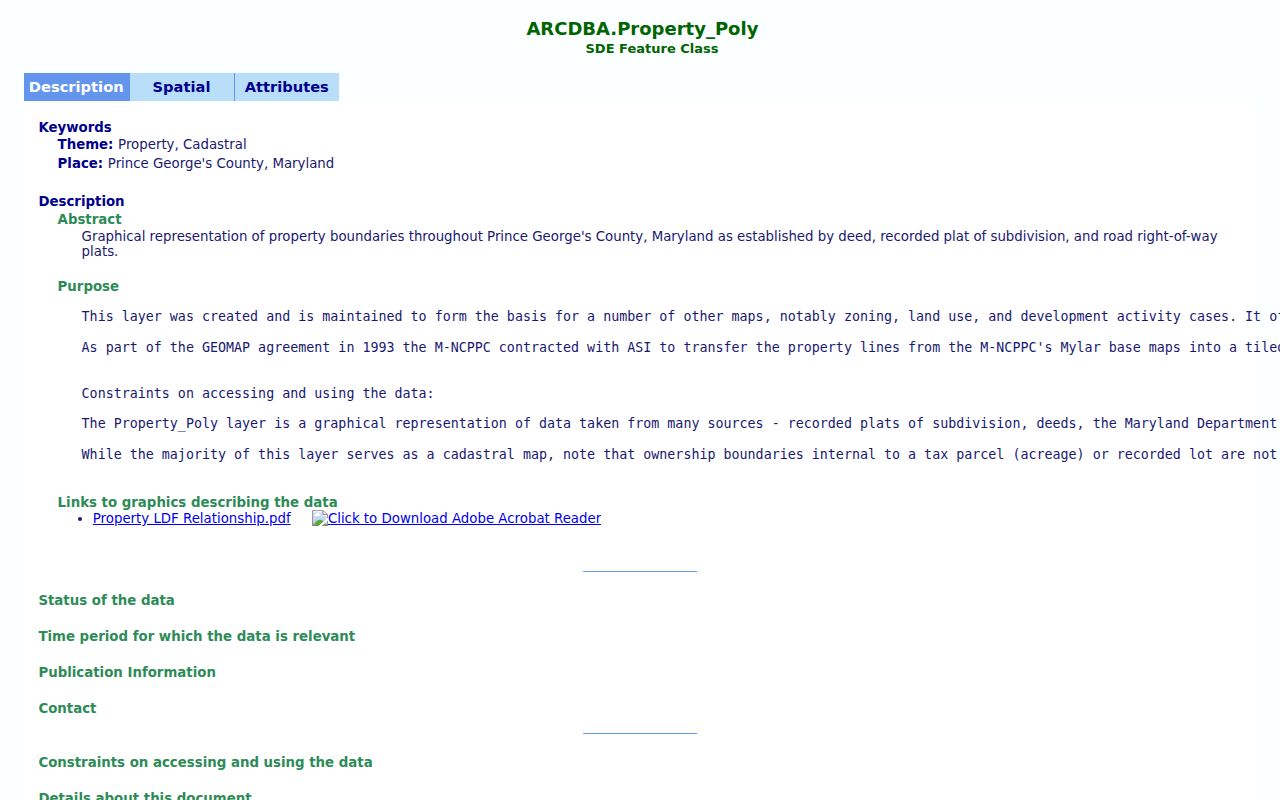
When a Clinton line truly matters, compare the map against the recorded deed and a Maryland Plats record, keeping the date and source layer you used.
Clinton Voter Access Limits
Maryland's Voter Search serves one voter at a time. A Clinton resident can check their own registration, polling place, district, and ballot status. It takes a first and last name, date of birth, Maryland residential ZIP, and a CAPTCHA. Street number and middle initial are optional. It is not a nearby-voter search. It cannot generate a Clinton street or ZIP roster of any kind.
The registered-voter-file request is a separate and stricter route. Maryland Election Law §3-506 and its application demand an eligible registered voter, a stated lawful use, payment, and a signed oath. Some list types include address and precinct fields. But non-electoral use and transfer are barred, and protected Clinton addresses stay protected. The county Board of Elections can walk an applicant through the process. It will not convert a block inquiry into an open list.
Clinton Neighbors Association Access
Clinton community associations speak for their neighborhoods on development notices. They do not function as an occupant directory. The county relies on a registration channel. It publishes no list of current Clinton association names or members. That Clinton gap matters. An organization here may map to a planning area, subdivision, or council district. Yet it still tells you nothing about who lives at each address within it.
| Community source | What is available | What it does not supply |
|---|---|---|
| M-NCPPC Association Registration | Clinton-area organizations register for monthly development-application information and update annually; residents can register in up to two council districts. | A public roster of members or Clinton households. |
| Common-ownership documents | Recorded or deposited Clinton association documents through the Clerk’s Judicial Administrative Services depository, under Maryland Real Property §11B-113. | A current Clinton resident or membership list. |
| Library and newspaper files | Dated community notices and historical context through catalog or staff requests. | A verified present-day organization roster. |
M-NCPPC Association Registration shows the notice and annual-update purpose of this countywide channel.
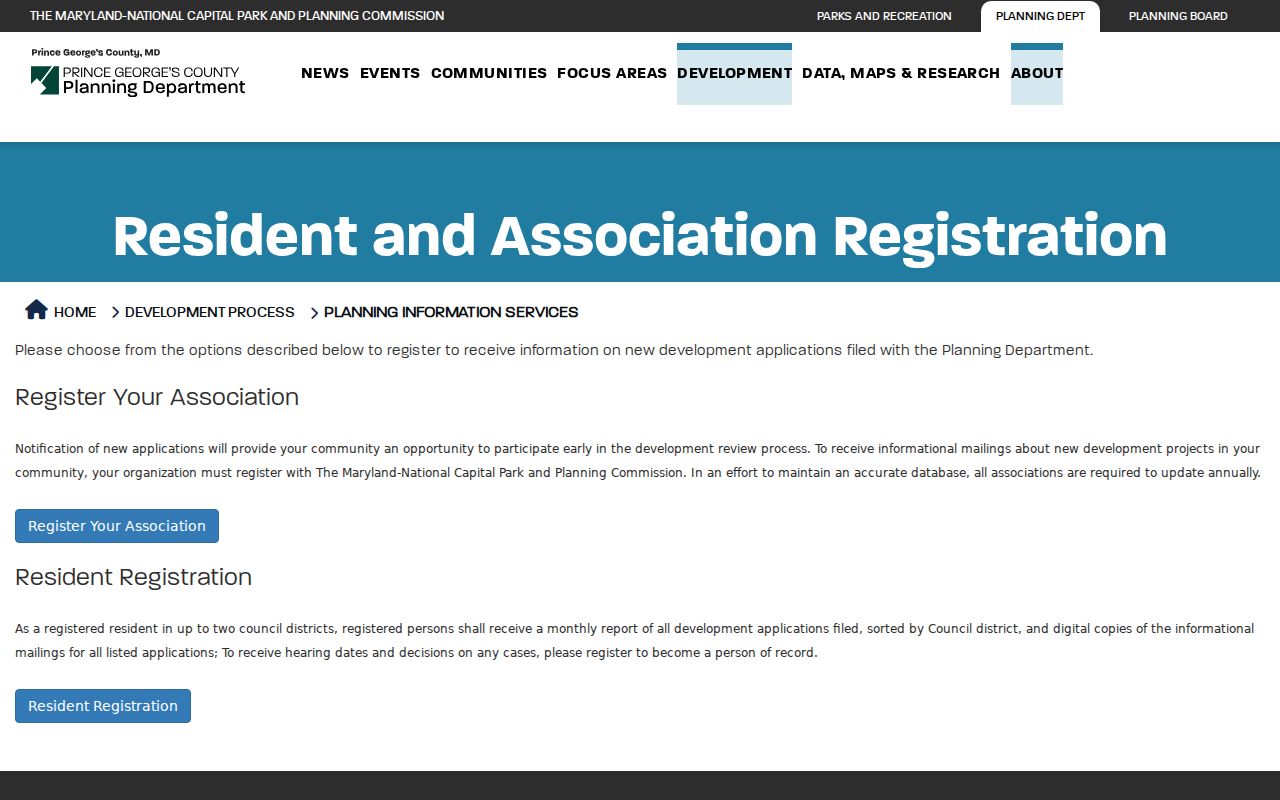
Registration can point you to a Clinton organization's official contact path. Its public purpose is development notices, though, not a resident lookup for people.
Clinton Block Record Comparison
Official Clinton records and commercial neighbor tools answer different questions. The official Clinton route ties every result to a named custodian. It also names a date and a specific record type. Commercial tools often blend Clinton parcel data, marketing lists, and public-record links. They then pair nearby households through uncertain matching. A commercial result can lag a transfer, merge two households, or skip non-owner occupants. Neither kind of source should be used to expose protected Clinton people.
| Question | Official county and state records | Commercial neighbor tools |
|---|---|---|
| Parcel relationship | PGAtlas, deed, and plat records identify the supporting source and date. | May infer relationships from compiled address data. |
| Recorded property party | SDAT and land records distinguish assessment fields from recorded instruments. | May present stale or merged associations. |
| Household information | No complete public block household record was found. | May omit or misassociate people and cannot override protected records. |
Treat any commercial Clinton result as an unverified lead. Check it against the official Clinton property or recorded-document source, and never republish a sensitive association.
Clinton Historical Block Sources
For an earlier era, ask the Prince George's Room for a reverse or criss-cross directory. Ask for the street section of that directory. Write down the title, year, page, and abbreviation key. Exact Clinton reverse-directory years vary, so consult the catalog or staff before assuming coverage. Historic Clinton newspaper microfilm runs locally from 1900 through 2010. It adds dated address notices and obituaries. Issue and title gaps exist, and they require confirmation.
Search older Clinton material under Clinton, Surrattsville, or Surratt. Attach a date to every name variant you use. Census records offer a dated Clinton enumeration snapshot. They are not a precise current parcel or an unbroken street sequence. Sometimes an online map cannot answer an old Clinton block question. In that case, the Prince George's Room, Historical Society files, and Maryland State Archives remain the documented Clinton fallback channels.
Privacy Limits for Clinton Neighbors
No Clinton block search reveals every household member. Unrecorded occupants stay hidden. Private utility and delivery records stay hidden too. Protected voter addresses, sealed court files, and restricted vital records all stay hidden. Maryland Safe at Home participants may use a substitute address. Their actual Clinton address is controlled through the program and legal process. Clinton court, voter, and record custodians also withhold protected material. Stop whenever a Clinton result points to a protected person or a restricted record.
Lawful use. Use block and parcel records for personal, lawful research, civic context, or property history. Do not monitor, harass, stalk, or intimidate anyone through a neighbor search or publish protected address information.
If an address needs protection, follow the custodian's procedures and the Maryland Safe at Home Address Confidentiality Program. A public map or record index never removes those safeguards.